





Eye For Film >> Movies >> Out Laws (2025) Film Review




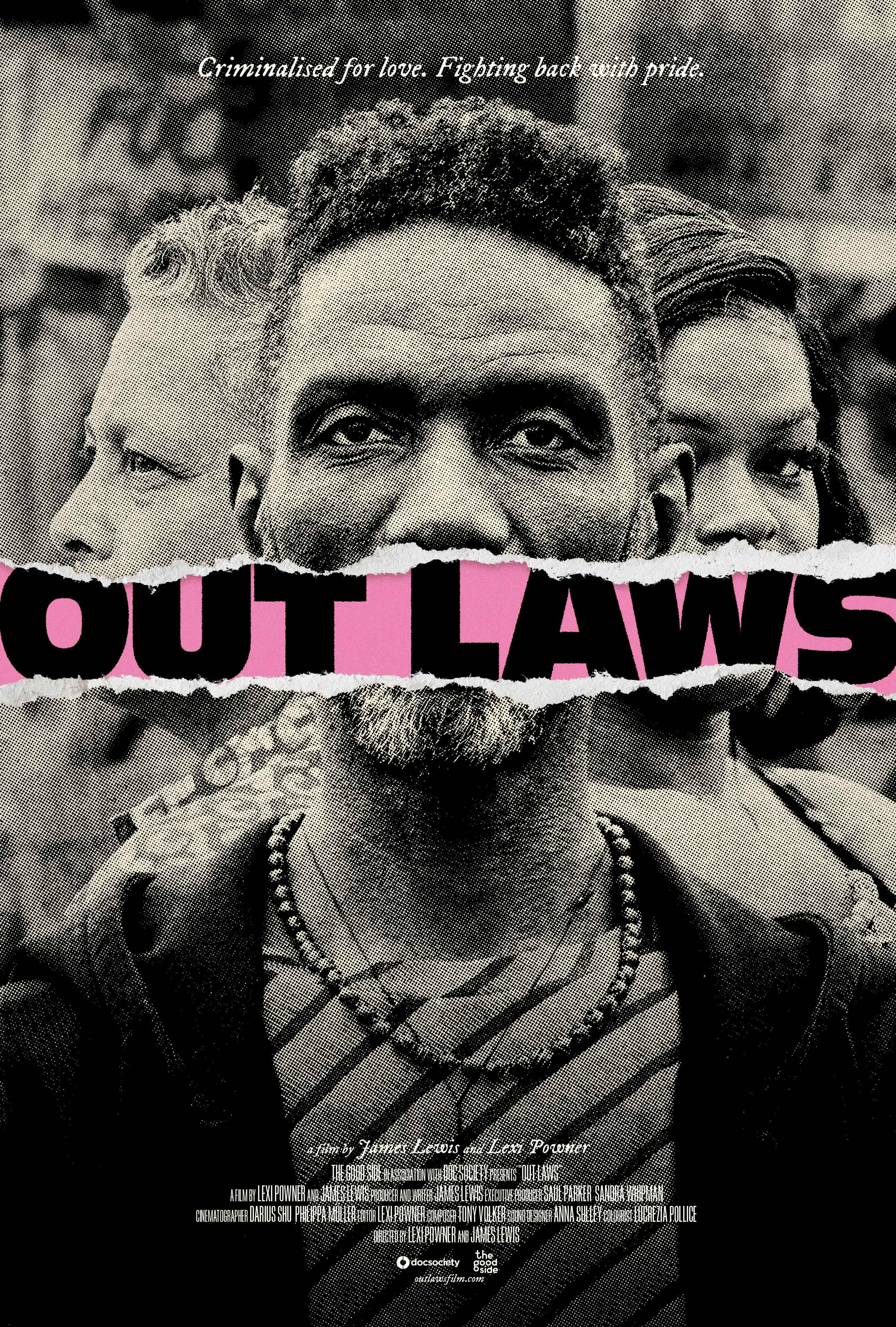
“All we want to do is to be happy and I’m not really sure why it’s so hard to understand that.” In Namibia, Friedel’s life is restricted by a law which classes his intimate romantic relationships in the same way as arson and terrorism. He has spent 30 years trying to persuade his government to recognise him as a human being. As he reaches the point where a decision will be made in the highest court in the land, documentary-makers James Lewis and Lexi Powner join him to see what the outcome will be, and to learn more about his experiences and those of his LGBTQ+ compatriots.
Out Laws, which screened as part of BFI Flare 2026, reflects on situations like this around the world. Also participating are Rosanna Flamer-Caldera from Sri Lanka, who took a case to the UN which secured a global precedent for women’s rights, and Barbados’ Raven Gill, whose struggle led to major legal changes. The three campaigners met when attending London Pride and we see them here enjoying the freedom and celebratiopn it offers, then taking the opportunity to discuss the global outlook.

In addressing that outlook, at a difficult time, Lewis and Powner also dig into the past to explore the history of laws like Namibia’s, which exist in over 60 countries around the world and are in many cases a legacy of the British Empire. Though some viewers will already be familiar with this, it’s quite something to see the original piece of parchment – not much bigger than the back of an envelope – on which England’s King Henry VIII, a man who personally made breaking sexual conventions into something of a hobby, wrote the first coda condemning same sex intimate relations, condemning millions of people across the span of more than four centuries to violence and persecution.
Today, of course, there is another force driving the same kind of prejudice: a particular strain of US evangelism which puts big money into exporting its culture wars, often for political advantage. Setting the two historical processes side by side makes it easy to identify commonalities. The history of colonised countries, some (though not all) of which were positive about LGBTQ+ people prior to the arrival of the British, is further obfuscated in the process. Consequently, some of the film’s participants see addressing these laws as a necessary part of the decolonising process. Political independence must be followed by a cultural reckoning.
Balanced between individual interviews, the light-heartedness of Pride and the deep focus of the historical sections, the film can feel a bit uneven, but it does an important job in putting these pieces together and in documenting their meaning at this point in history. The interviews themselves balance the insight of these highly experienced campaigners with an acknowledgement of the personal sacrifices they have made, and the risks they run. There is some material in this section which viewers many find distressing, especially if they feel vulnerable themselves, but there are also positive elements. Friedel is proud to have the support of his 80-year-old mother, who is a Christian but does not feel it’s right that people should face discrimination because of who they love.
For those in the West who now live comfortable lives and feel secure, Out Laws is a reminder that the struggle is far from over. For those daunted by recent regressive changes in laws and their interpretation, it is a reminder of just how much can be achieved even in seemingly impossible circumstances. It illustrates that this is a global movement and that that there will be wins and there will be losses, but we are never without hope of reaching a fairer world.
Reviewed on: 25 Mar 2026


Director: Lexi Powner, James Lewis
Writer: James Lewis
Starring: Friedel Dausab, Rosanna Flamer-Caldera, Raven Gill
Year: 2025
Runtime: 79 minutes
Country: UK, Namibia
Search database:
